INSIDE THE REMIX: MARY OLIVETTI ON SCHMETTERLINGE IM BAUCH
Entrevista por RAIO LASER
Mary Olivetti atravessa há mais de duas décadas diferentes camadas da cultura musical — do rádio e dos grandes clubes no Brasil às pistas underground e listening bars na Europa.
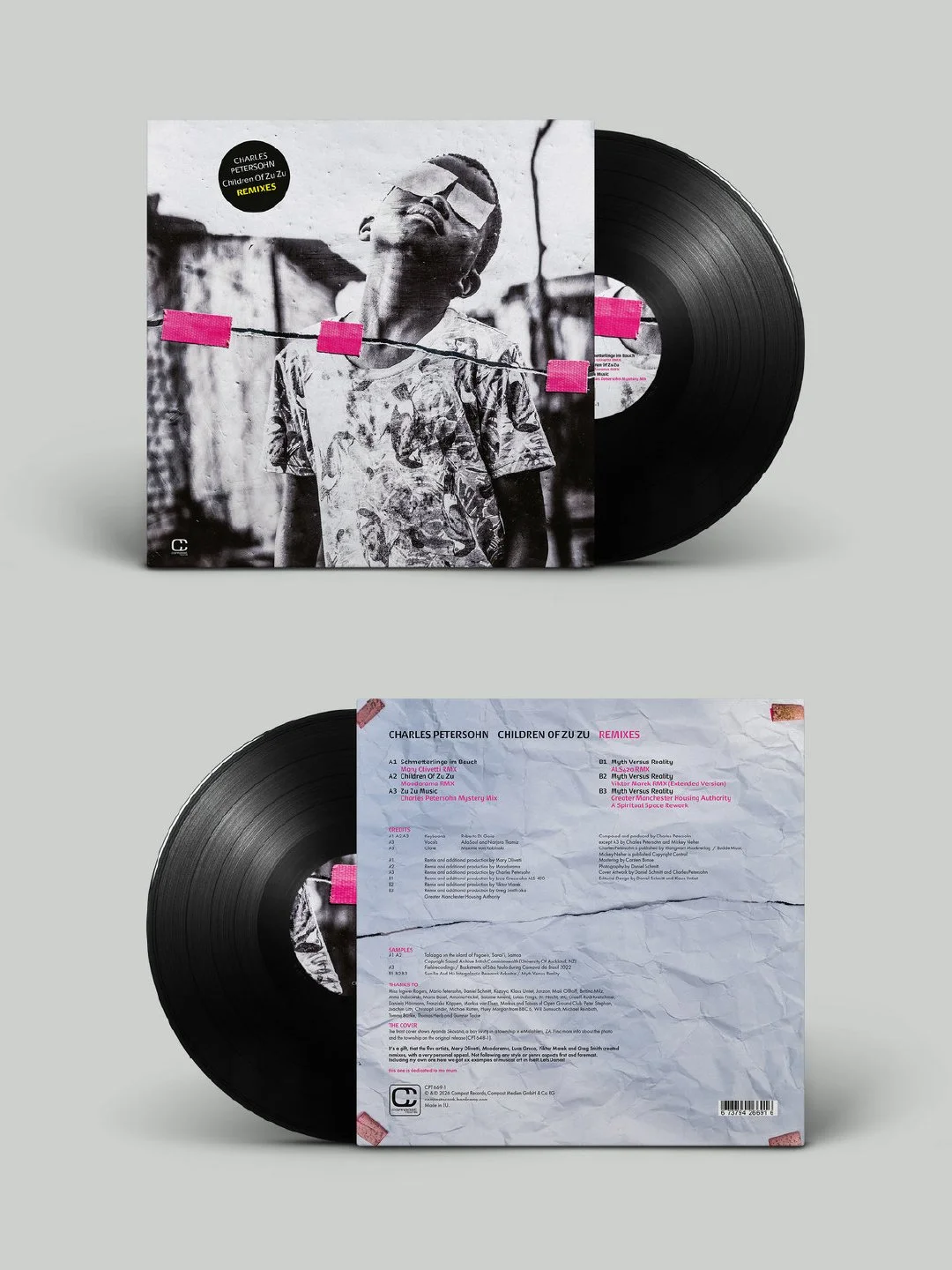
Seu mais recente remix para Charles Petersohn, lançado pela Compost Records, reflete uma abordagem refinada e profundamente musical de produção, combinando estruturas de breakbeat, sensibilidades jazzísticas e influências brasileiras.
Nesta conversa, ela compartilha seu processo criativo, as referências por trás do remix e como esse trabalho se conecta com o momento atual de sua trajetória artística.
— O que mais te chamou atenção na faixa original de Charles Petersohn e o que te motivou a reinterpretá-la?
Quando me enviaram o disco e me pediram para escolher uma faixa para remixar, confesso que foi difícil, gostei muito do álbum inteiro. Mas Schmetterlinge Im Bauch acabou se destacando para mim. Há algo na faixa original que imediatamente me remeteu à referências brasileiras como Azymuth, Marcos Valle e arranjos de meu pai em certa época.
Senti ali uma musicalidade muito forte, exatamente o tipo de material que me dá prazer em reinterpretar. Sempre acredito que, quanto mais elaborado e interessante é o arranjo da música original, mais possibilidades surgem para construir um remix com personalidade.
— No seu remix, há uma presença forte de breakbeat com elementos jazzísticos. Como foi o processo de transformar a estrutura da faixa original nessa nova leitura rítmica?
Eu começo o processo de remix isolando os elementos essenciais da música original, aqueles que não poderiam ficar de fora em uma nova versão. Nesse caso, foram principalmente os teclados, o Rhodes, meu preferido, e o Synclavier. Depois dessa escolha, passo horas experimentando diferentes baterias. É um processo longo até entender em que esfera rítmica essa nova versão vai habitar. Os elementos jazzísticos, na verdade, já estavam todos ali, eu apenas procurei valorizá-los e trazê-los ainda mais para a frente na mixagem.
A escolha do breakbeat foi bastante intencional. Eu quis fazer uma entrega que dialogasse com a história da Compost Records, já que esse estilo fez parte da identidade da gravadora cerca de 30 anos atrás. Quis criar algo pensado também para esse universo.
— Quais decisões criativas foram fundamentais para encontrar o equilíbrio entre respeitar a essência da composição original e imprimir sua própria identidade sonora?
O equilíbrio veio muito da forma como conduzi a produção e a mixagem, que também foi feita por mim. Quando chego nessa etapa, consigo realmente moldar o caráter da faixa e trazer muito da minha forma de pensar música. Também trabalhei bastante a estrutura do remix. Quis criar uma narrativa que passasse por momentos de tensão e liberação: um break mais dramático, e depois uma volta firme, quase como um retorno triunfal.
— Existe algum detalhe de produção, groove ou textura que você considera central para entender a personalidade deste remix?
Acho que um detalhe importante para entender a personalidade do remix são os vocais de crianças brincando que aparecem em alguns momentos da faixa. Eles trazem uma atmosfera muito particular, quase como uma memória sonora. Para mim, isso cria uma sensação que mistura algo africano, brasileiro — quase de comunidade, de favela — com uma energia jazzística e leve.
Esse elemento ajuda a reforçar a ideia de colagem que existe no próprio disco, entre deep house, ambient jazz e ferramentas de pista. No remix, procurei trabalhar essas texturas de forma orgânica, criando um ambiente que fosse ao mesmo tempo rítmico, musical e cheio de ar.
— Como esse trabalho dialoga com o momento atual da sua trajetória artística e com o tipo de linguagem musical que você vem explorando nos últimos anos?
Antes de tudo, lançar algo pela Compost Records é uma grande honra para mim. É uma gravadora com uma história muito importante dentro da música que eu gosto, e esse lançamento também me ajuda a expandir ainda mais minha carreira fora do Brasil. A Alemanha, em especial, tem me apoiado muito, e isso significa muito para mim.
Eu ainda me considero uma novata no mundo da produção, então tudo o que faço é com muito cuidado e atenção. Ser escolhida para o single e ainda ter a música prensada em vinil me deixa muito feliz com o resultado, e sou muito grata ao Charles e à Compost por essa oportunidade.
Interview by RAIO LASER
Mary Olivetti has spent over two decades navigating different layers of music culture — from radio and large-scale clubs in Brazil to underground dancefloors and listening bars across Europe.
Her latest remix for Charles Petersohn, released via Compost Records, reflects a refined and deeply musical approach to production, blending breakbeat structures, jazz sensibilities and Brazilian influences.
In this conversation, she shares her creative process, the references behind the remix, and how this work connects to her current artistic phase.
— What drew you to the original track by Charles Petersohn and what motivated you to reinterpret it?
When they sent me the record and asked me to choose a track to remix, I have to admit it was difficult because I really loved the entire album. But Schmetterlinge Im Bauch ended up standing out to me. There was something in that track that immediately reminded me of references I deeply love, like Azymuth, Marcos Valle, and even certain types of arrangements I grew up hearing in my father’s work.
I felt a very rich musicality there, exactly the kind of material I enjoy reinterpreting. I’ve always believed that the more elaborate and interesting the original arrangement is, the more possibilities there are to create a remix with personality.
— In your remix, there’s a strong breakbeat presence with jazz elements. How did you approach transforming the original structure into this new rhythmic direction?
I usually start the remix process by isolating the essential elements of the original track, the parts that simply couldn’t be left out in a new version. In this case, the Synclavier and the Rhodes were the key elements. After making that choice, I spend hours experimenting with different beats on analog electronic drum machines. It’s really an exploratory process, until I begin to understand the rhythmic space where the new version will live. The jazz elements were already present in the original track, I simply tried to highlight them and bring them further forward in the remix.
The decision to use a breakbeat was very intentional. I wanted to deliver something that would resonate with the legacy of Compost Records, since this style was part of the label’s identity around 30 years ago. I wanted to create something that also speaks to that universe.
— What creative decisions were key in balancing respect for the original composition with your own sonic identity?
For me, the balance came largely from the way I approached the production and the mix, which I also did myself. That stage is where I can really shape the character of the track and bring in a lot of my own way of thinking about music. I also worked carefully on the structure of the remix. I wanted to create a narrative that moves through moments of tension and release: a more dramatic break in the middle, followed by a strong return of the music, almost like a triumphant comeback. That kind of dynamic really interests me. In the end, the result turned out to be very musical. There’s a strong presence of minor chords, which is something I particularly love and that has become part of my language as a producer.
— Is there any production detail, groove or texture that you consider central to understanding the personality of this remix?
I think an important detail to understand the personality of the remix is the children’s voices playing that appear in some moments of the track. They bring a very particular atmosphere, almost like a sonic memory. For me, it creates a feeling that mixes something African and Brazilian — almost like the energy of a favela — with a kind of loose, jazz-like spirit.
That element helps reinforce the idea of collage that also exists in the record itself, between deep house, ambient jazz and dancefloor tools. In the remix, I tried to work with these textures in a very organic way, creating a space that feels rhythmic, musical and atmospheric at the same time.
How does this work connect with your current artistic phase and the musical language you’ve been exploring in recent years?
First of all, releasing something on Compost Records is a great honor for me. It’s a label with a very important history in the kind of music I love, and this release also helps me expand my career further outside Brazil — Germany in particular has been very supportive of my work, which means a lot to me.
I still consider myself a newcomer in the world of music production, so everything I do is approached with great care and attention. Being chosen for the single and having the track pressed on vinyl makes me very proud of the result, and I’m very grateful to Charles and to Compost for this opportunity.